
Countertop guide
Porcelain vs. Quartz Countertops: How They Compare
The short answer
Both are manufactured, non-porous and never need sealing. Quartz is crushed quartz bound with resin; MSI recommends trivets for hot pans and does not recommend it outdoors, because the resin can yellow or fade in prolonged sun. Porcelain slabs are thin, large-format panels that MSI describes as resistant to heat, stains, scratches and fading, for indoor and outdoor use. The trade-off is edges: quartz has color through the body, while porcelain's pattern is printed on the surface.
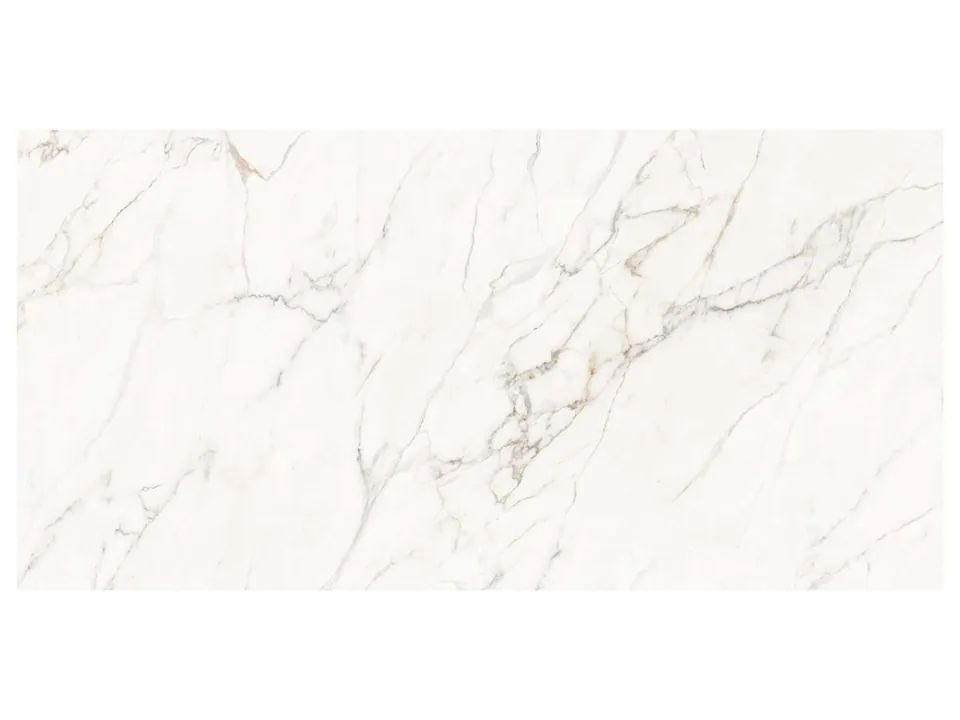 Manufacturer image · MSI
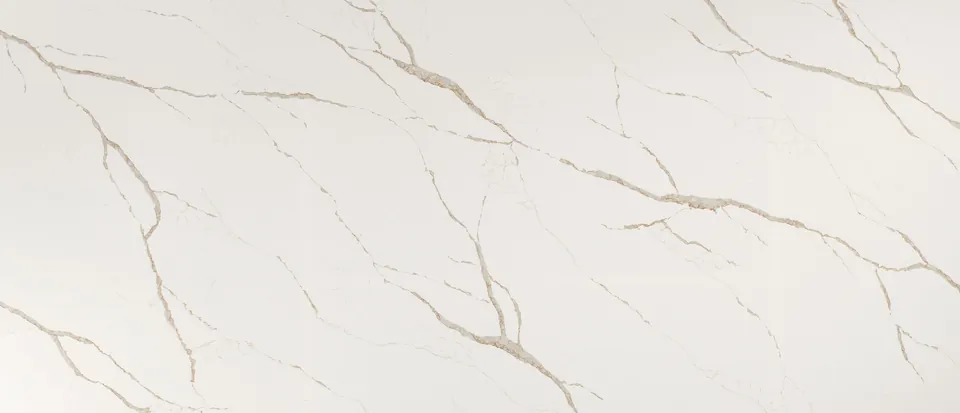 Manufacturer image · MSI
Porcelain and quartz at a glance
| Feature | Porcelain slab | Quartz |
|---|---|---|
| What it is | Porcelain made in large, thin slabs | Engineered stone: crushed quartz and resin |
| Thickness (MSI) | Stile slabs in 6, 12 and 20 mm | 2 cm and 3 cm |
| Sealing | Never | Never |
| Hot pans | MSI lists heat resistance; use trivets anyway | Use trivets; heat can damage the resin |
| Outdoors | Listed by MSI for outdoor use | Not recommended by MSI |
| Pattern | Printed on the surface | Color runs through the slab |
General characteristics. Care and suitability vary by product and slab, so check the supplier's guidance for yours.
Heat, sun and stains
MSI describes quartz as non-porous and stain-resistant, but sensitive to extreme heat, and says its resin may yellow or fade with prolonged UV exposure, so it isn't recommended for outdoor kitchens (MSI Surfaces). MSI's Stile porcelain is described as water-, stain- and fade-proof, heat- and frost-resistant, and suitable indoors and out (MSI Surfaces).
Neither needs sealing. MSI notes that abrasive cleaners can scratch porcelain (MSI Surfaces), and its quartz care guide warns against abrasive pads too (MSI Surfaces).
Looks and edges
Quartz has "throughbody" color, which allows a wider range of edge finishes, while porcelain delivers its stone look through a digital print on the surface (Stone World). That's why porcelain edges are often kept simple or mitered, so the pattern carries over the edge. Our edge profile guide explains the options.
Porcelain comes in very large slabs (MSI lists 63 x 126 inches for Stile, per MSI), which suits full-height backsplashes and fireplace walls with few seams.
Real examples
- Porcelain: Calacatta Lucca, Statuario Silver and Cement Ash.
- Quartz: Calacatta Laza Oro and the rest of our quartz catalog.
- Both come in marble looks: see marble-look quartz.
FAQ
Common questions
Is porcelain more heat resistant than quartz?
MSI lists heat resistance for its Stile porcelain and calls quartz sensitive to extreme heat, so porcelain is the more heat-tolerant of the two. A trivet is still the safe habit on any counter.
Can quartz or porcelain go in an outdoor kitchen?
MSI lists its Stile porcelain for indoor and outdoor use and does not recommend quartz outdoors because of UV yellowing. We confirm the specific product before fabrication.
Which works better for a waterfall island?
Both can be fabricated as a waterfall. Quartz's through-body color helps at the edges; porcelain's large slabs and printed veining can be laid out to flow down the side.
Sources
Material properties on this page come from these supplier and industry pages, checked November 1, 2026.
Free in-home estimate
Talk it through in your own kitchen.
We come to you, measure, and help you weigh the options. The estimate is free, with no obligation.