
Countertop guide
Marble Countertops: Pros, Cons and Living With Patina
The short answer
Marble's draw is its soft veining and the way it ages. Its trade-off is that it's a calcite-based stone: acidic foods and cleaners etch dull marks into it, and it can stain if it isn't sealed. MSI recommends sealing marble at least once a year. Marble suits people who welcome a lived-in patina; if you want a surface that stays unchanged, look at quartz or quartzite.
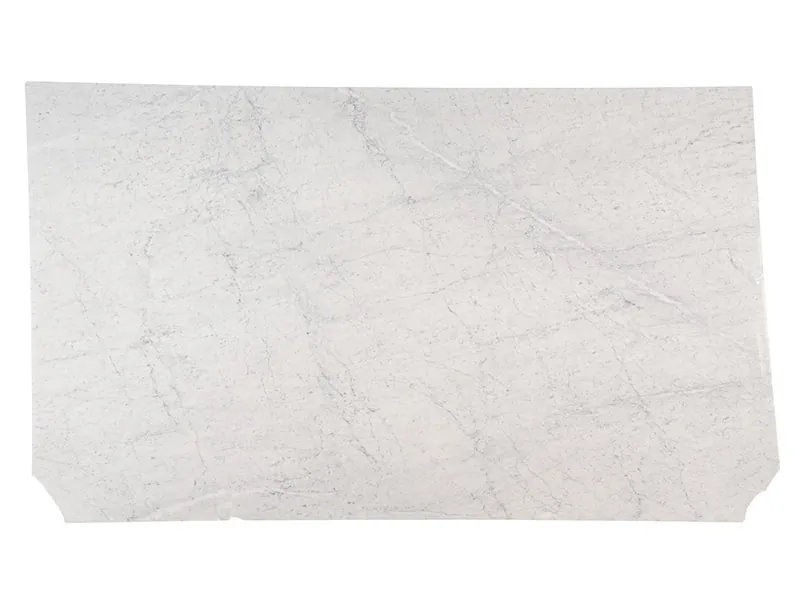 Manufacturer image · MSI
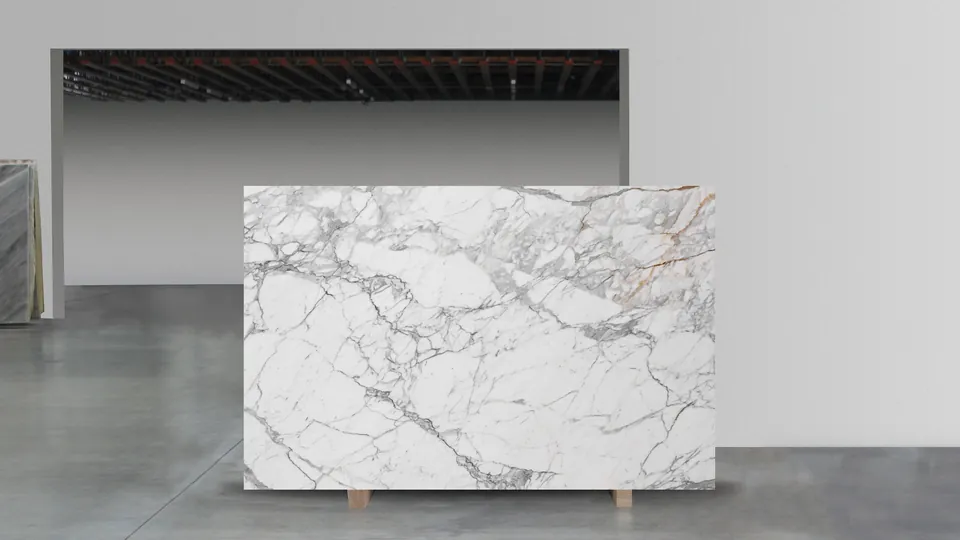 Manufacturer image · NSR
What you get with marble
- Classic veining that no two slabs share.
- A surface that softens and develops character with use.
- A natural fit for vanities, fireplace surrounds and kitchens with a traditional or European feel.
Etching and staining are different problems
Etching is a chemical reaction: acids such as lemon juice or vinegar react with the calcium carbonate in marble and leave a dull spot (MSI Surfaces). Staining is absorption: coffee, oil or wine soaks into the pores and leaves color behind.
Sealing helps with stains, not etching. MSI notes that an impregnating sealer slows how fast liquids get in but doesn't protect against acids (MSI Surfaces).
Sealing and daily care
MSI recommends sealing marble countertops at least once a year (MSI Surfaces). For cleaning, MSI suggests blotting spills right away and washing with a pH-neutral dish soap and warm water, and avoiding vinegar, bleach, ammonia and gritty cleaners (MSI Surfaces).
Honed or polished?
A polished finish shows etch marks more because the dull spot breaks the shine. A honed finish hides them better. We cover the finish choice on our marble countertops page.
If the upkeep gives you pause
Quartz comes in marble looks with no sealing and no etching. Quartzite offers natural veining with more resistance to acids. Our quartz vs. quartzite guide compares the two.
FAQ
Common questions
Will sealing stop marble from etching?
No. Sealer slows stains by limiting what soaks in, but acids still react with the surface. Wiping up acidic spills quickly matters more than the sealer.
Can etch marks be removed?
Light etching can often be refinished by a stone restoration professional, who hones or repolishes the affected area. Deeper damage is harder to hide.
Where in the house does marble work best?
Places with fewer acidic spills: vanity tops, fireplace surrounds and baking areas. In a busy kitchen it works too, as long as you're happy with patina.
Sources
Material properties on this page come from these supplier and industry pages, checked November 1, 2026.
Free in-home estimate
Talk it through in your own kitchen.
We come to you, measure, and help you weigh the options. The estimate is free, with no obligation.